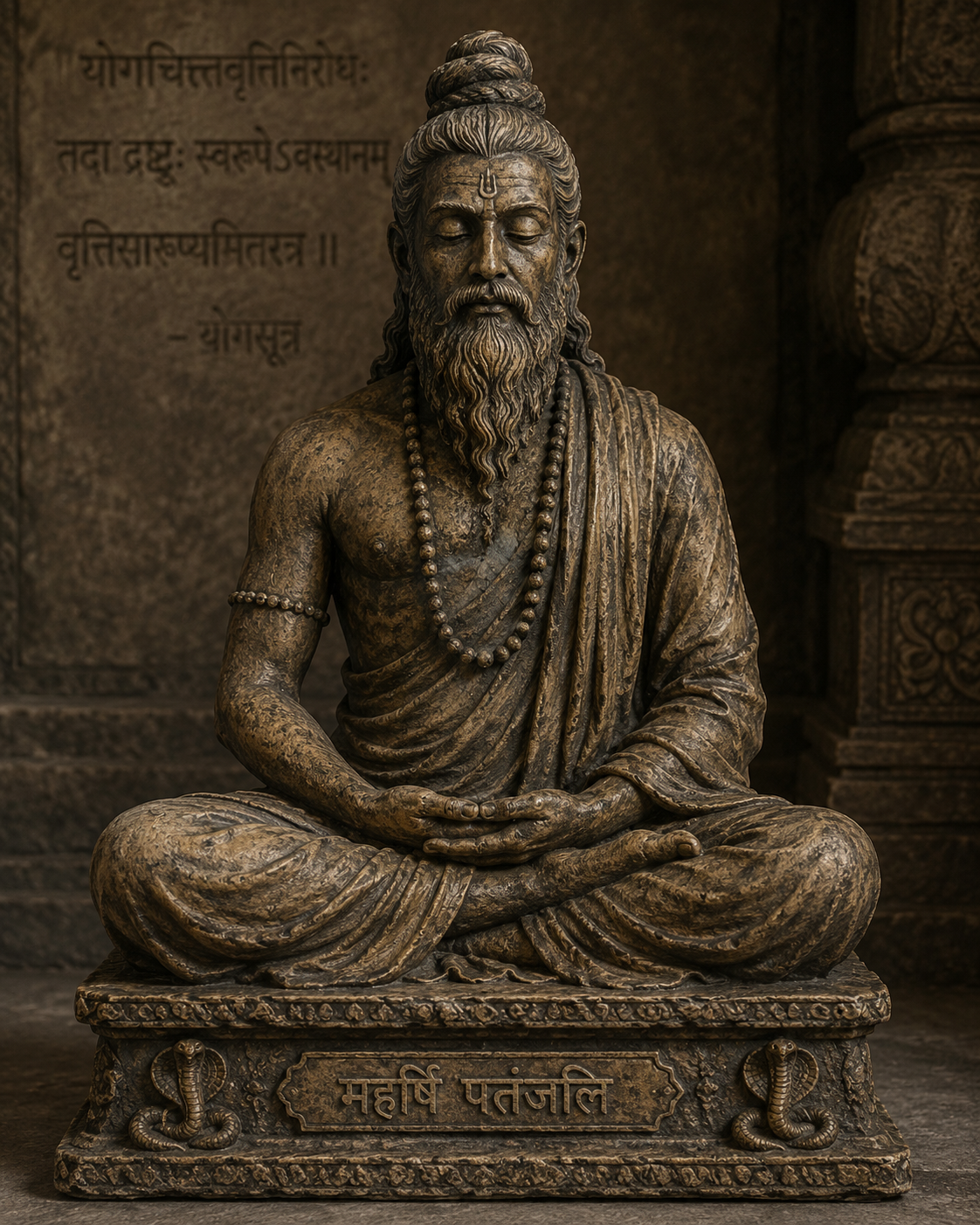
Understanding the Heart of Yoga
Yoga Sutra 1.2 presents one of the most influential definitions in the Yoga tradition. It directs attention away from yoga as merely physical exercise and toward the cultivation of a settled, clear, and attentive mind.
The Definition of Yoga
yogaś citta-vṛtti-nirodhaḥ
“Yoga is the stilling, restraint, or cessation of the modifications of citta.”
Yogaḥ
A state of yogic integration or realization, not only a set of exercises.
Citta
The mental-emotional field: cognition, memory, attention, and the sense of self.
Vṛtti
A fluctuation, modification, or pattern arising in the mental field.
Nirodhaḥ
Stillness or restraint; traditionally understood as settling, not forced suppression.
The Five Vṛttis
Patanjali later classifies mental activity into five broad forms. This does not mean every thought is bad; the issue is becoming automatically identified with mental activity.
Pramāṇa
Correct perception or valid cognition.
Viparyaya
Misperception or incorrect knowledge.
Vikalpa
Imagination or conceptual construction without a corresponding object.
Nidrā
Sleep, described as a particular mental modification.
Smṛti
Memory or the retention of past experience.
Practice in Context
In the Yoga Sutras, ethical discipline, stable posture, breath regulation, sense withdrawal, concentration, meditation, and absorption are presented as mutually supporting practices. A brief daily meditation, gentle attention to the breath, and ethical reflection can offer a practical beginning.
The goal is not to wage war on thinking. Rather, practice develops the capacity to recognize thoughts and emotions without being carried away by each one.
History, Tradition, and Evidence
The Yoga Sutras are traditionally attributed to Patanjali, though their precise date and authorship remain academic questions. The text draws on the philosophical vocabulary of Sāṃkhya and engages a wider ancient Indian contemplative world.
Modern research can investigate effects of yoga, meditation, and breathing practices on stress, attention, and well-being. It cannot, by itself, prove or disprove metaphysical claims about liberation, pure consciousness, or the ultimate nature of the self.
Continue Your Study
Explore the historical background, frequently asked questions, Sanskrit terminology, and research sources in the rest of this learning resource.
History & SourcesRead the FAQExplore the GlossaryView References